


SIYASAT'26
'Behind the Political Veil: Knowledge, Beliefs and Meanings'
With the theme
Politics never uncovers itself explicitly. What we see, hear, or experience in public life, symbols, narratives, slogans and ideologies, is a visible surface concealing deeper truths about power, truth and belongingness. The political veil is the lacuna between political reality and our perception and understanding of it. Engagement with politics is suffused with questioning the very frameworks through which it becomes meaningful, shaped as much by beliefs, memories, language and perception as by laws and formal structures.
The
attention moves from what happens in politics to how understand it. 'Political knowledge' is not neutral, but something that is produced, circulated and legitimised. Education, media, tradition and authority all contribute to defining what is credible knowledge what is ignorance or suppressed. Knowledge is therefore tied how power, politics and the people possessing them mould realities.
and
'Beliefs' operate within this terrain of knowledge. They organise political judgement, sustain ideological commitments and give coherence to collective identities. Citizens are not detached observers; we are participants whose judgments are shaped by memory, emotion, caste, class, religion, region and lived economic realities, thereby making politics not just about policies but about the values and assumptions that guide us how to interpret them.
The "political veil" functions as a semiotic boundary where knowledge and belief intersect. To peer behind this veil is to engage in a deconstructive analysis of how these meanings are socially engineered, stabilized through institutional discourse, and rendered as "natural" or "inevitable" axioms of reality.
This process reveals that what is often accepted as political common sense is, in fact, a carefully curated landscape where the state manages the boundaries of the thinkable- legitimizing certain identities while silencing others. This issue explores how politics extends beyond governance into the domain of interpretation. It shapes not only decisions and institutions but also the categories through which the world is understood.

MEET THE ED-BOARD
Editorial Board

Pramit
Managing Editor

Parnika
Managing Editor

Kriti Vyas
Managing Editor
.jpeg)
Koshira Ayodhyawasi
Managing Editor
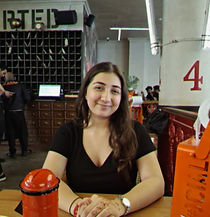
Niddha Razdan
Managing Editor

Akshaya Rajkumar
Senior Editor
_HEIC.png)
Ananya Arya
Senior Editor

Kanika Soni
Senior Editor

Palak
Senior Editor

Srishti
Senior Editor

Vivaan Menon
Senior Editor

Aastha Pant
Junior Editor

Gaurav Kohli
Junior Editor

Ishita Kanyal
Junior Editor & Designer


Shubhaan Sharma
Sanskriti Agrawal
Vibhu Dabral
Junior Editor
Junior Editor
Junior Editor

Khushi Jha
Junior Editor
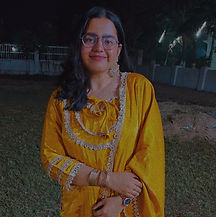
Soumya Sudha
Junior Editor

Navodita Sharma
Junior Editor
Design Board

Parnika Gupta
Design Head
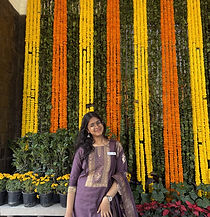.jpeg)
Koshira Ayodhyawasi
Design Sub-Head
Kriti Vyas
Senior Designer

Lipika Gusain
Junior Designer

Shree Trivedi
Junior Designer

Suryansh Gupta
Junior Designer

Diyasha Bag
Junior Designer

Chirag Kumar
Senior Designer
