


The Pixelated Portrayal of War

“In flickering light, the stories play,
War’s grim drama is on full display.
A camera’s eye, both fierce and cold,
Bears witness to truths and lies untold.
When headlines fight and images soar,
Our hearts are burdened by so much more.
For in the clash of fact and spin,
It’s hard to know what lies within.”
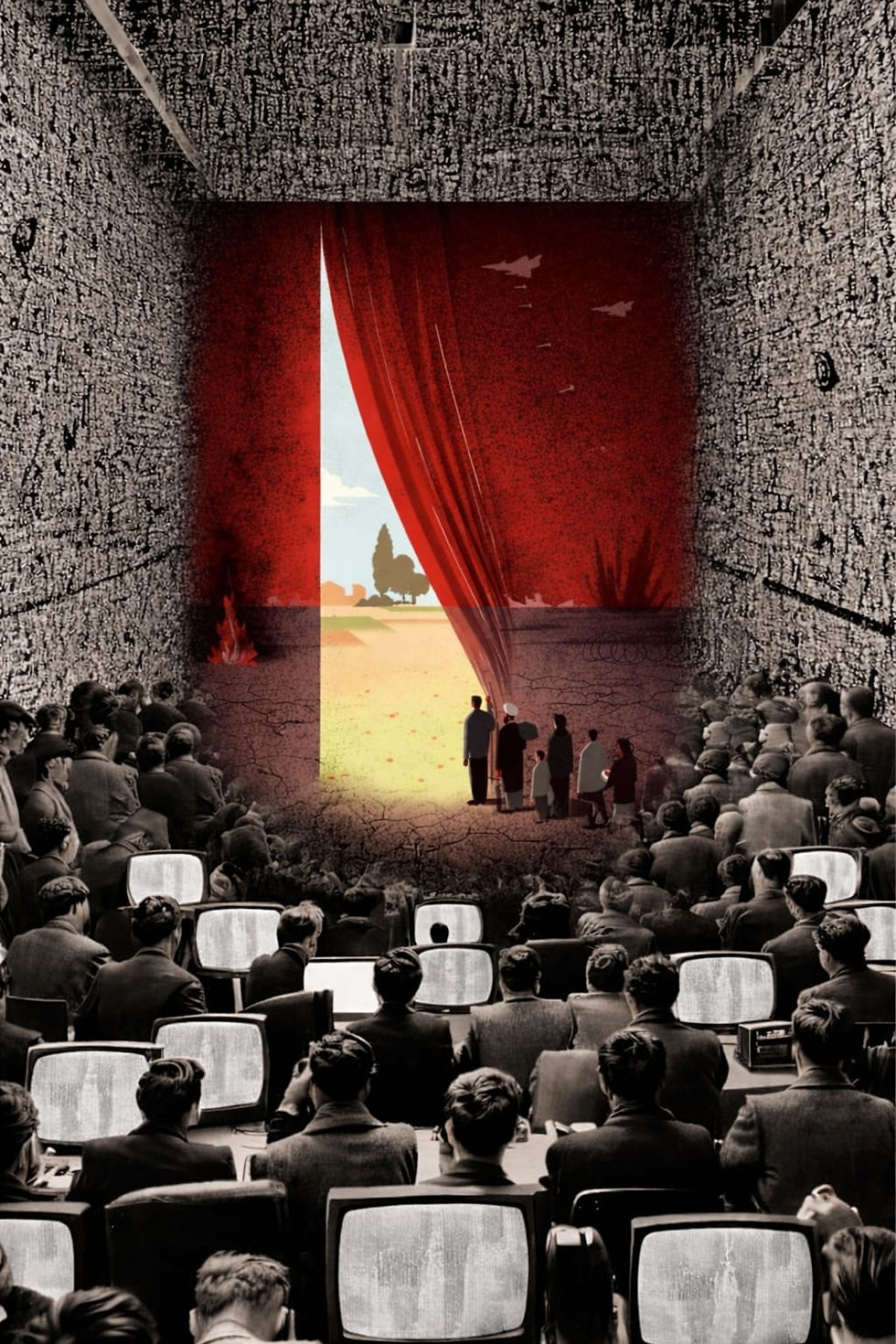
Media, the formidable pillar of governance, has been used as well as effectively misused many times to influence people’s mindsets. The flickering frontlines of the media present various news in such a way that, for once, people are made to believe even the false narratives. The media has done great work in capturing crises through the camera lens, but the point here is whether the camera is capturing reality or a manufactured reality displayed in a manipulative manner, whether the voices recorded on the mic are real grievances or just false pleas for acts of provocation. Is it just a game of jigsaw played by journalists?
DELVING INTO HISTORICAL ROOTS
History shows how the media, through clever wordplay and strategic storytelling, has presented illusions as undeniable facts, turning deception into belief and propaganda into history. Across the ages of war, it has masterfully blurred the lines between reality and illusion—where wordplay becomes a weapon, and the most artful distortions masquerade as undeniable facts.
Since ancient ages, different wars have been recorded at various stages in the form of hieroglyphics, texts, paintings, and even poetry and music. The first-ever war to be photographically portrayed was the Mexican-American War of 1846-48. The images gave the people back home real visual insights into the grim realities of warfare. The newspapers and radio broadcasts in World War I and II were used as tools to dehumanize the enemy and boost nationalism. This way, it mobilized the public perception and successfully aided the superpowers to justify their acts of genocide. Live display and real-time coverage proved to be an outstanding innovation that provided people with the news of immediate events. The Gulf War marked the birth of the “CNN effect”—where continuous live coverage influenced public perception and even policymaking. This timeline shows that the media plays a very crucial role as a double-edged sword in igniting conflicts and also resolving these disputes. The media has been powerful since time immemorial.
THE CASE STUDIES
The Russian-Ukrainian War
On 24th February 2022, Russia launched a full-scale invasion of Ukraine. The war in the contemporary age has turned into a long-term conflict, ongoing bloody battles, drone strikes, and global support for both countries. The war acquired limelight and international support through one strong factor of the present era- media. Media significantly influenced the war, shaped perceptions, and impacted both domestic and international responses. With this extensive coverage of the war, common people turned into soldiers, homes turned into an arena of war and a place of hot debates, and everybody became a battle strategist and a geopolitical analyst.
The media's multifaceted role in the Russia-Ukraine war incorporated both positive and negative impacts which impacted the trajectory of the conflict and its perception worldwide. It was the media that acted as a service provider for the world to know, act and respond to the situation. For example, NATO and other nations provided Ukraine with weapons, training, and billions in financial aid, and Russia reduced gas exports to Europe, leading to high energy prices. Media coverage of the Russia-Ukraine war has had several positive effects, influencing global awareness, humanitarian efforts, and political action. Millions of people worldwide have been educated on geopolitical issues, Ukraine’s history, and the broader impact of the conflict. Due to wide media coverage, people as well as nation-states empathized with the victims of cruelty, which resulted in countries opening their doors for wartime refugees. The documentation of war crimes and human rights violations through investigative journalism provided a safe historical record and evidence of the atrocities.
While spreading awareness and mobilizing support, it has also led to disinformation, panic, and geopolitical tensions. DeepFake videos, AI-generated images, and misleading footage have been used to manipulate public perception, making it harder to distinguish truth from fiction. Graphic images and war footage have resulted in distress, leading to increased anxiety and intense psychological impacts on the victims as well as the viewers. The wartime reporters and journalists fighting to capture real-time news and images to provide the world with accurate information have been killed, kidnapped or harassed, making it really difficult for others to take up the courage to join.
The Israel- Palestine war
The Israel-Palestine conflict, which has its roots in the spread of Zionism in the late 19th century, is one of the hot topics of debate among various countries, their leaders, bureaucrats, international organizations, and several media personnel. The conflict reached its pinnacle around 2023 with the onset of the Hamas attack on Israeli forces and citizens, which was retaliated against by Israel through Operation Iron Swords.
Media reports controlled how countries reacted to the Israel-Palestine war issue, their policies towards the affected countries, and their stand on military aid and diplomatic support. It acted as a podium through which the victims of the Israel-Palestine war anchored their grievances, gaining global sympathy and seeking aid and funds through online petitions. The media acted as a catalyst in accelerating the conflict and fuelling debates through the introduction of contrasting narratives. The media was both the source of trauma and resistance for the victims. Sometimes, it was just a tool in the hands of so-called activists who just played publicity stunts and were engaged in spreading fake news and presenting distorted reality. The media, which is claimed to be the pillar on which the palace of people’s rule rests, sometimes breaks due to the manipulation of truth, thus shattering the mighty fortress.
THE CINEMATIC CONSTRUCT OR TRUE-TO-LIFE DEPICTION?
The cinematic construct of war zones leaves an imprint on the hearts of the viewers and moves their souls. People start feeling an emotional connection with the characters and sometimes travel back to the past in their imaginations to experience those moments. Ranging from great historical battles like the Battle of Panipat to recent attacks and strikes, films have covered and celebrated bravery, sacrifice, and national identity. The first war film to be made was ‘Sea Fighting’ in Greece, which was set during the Greco-Turkish war. To add flair, make the display catchy, and craft a compelling appeal, the creators sometimes compromise with reality. The glorification and romanticization of the battlefield and the lives of characters conceal the brutality, trauma, and futility of war, due to which the portrayal sometimes seems more fictional than the reality that would have happened.
SHAPING PUBLIC PERCEPTION
Media has enough power to shape public perception by amplifying patriotism, building stereotypes and misconceptions or creating the enemy narrative by demonizing the enemy. During the 1965 Indo-Pak war, All India Radio highlighted Indian military successes while downplaying setbacks. Songs like ‘Aye Mere Watan ke Logon’ stirred the wave of nationalism and patriotism among people and also made people appreciate the war efforts. Media of both the countries had a significant impact in framing the war as a moral and strategic victory and, to a large extent, succeeded in manufacturing that narrative.
The media acts as a bridge between the government, military forces, and the public. It can even push nations toward war or pressure leaders into diplomacy. The government is pressured to respond swiftly to crises and fulfil the demands and needs of the victims and affected communities, as displayed by the ‘CNN effect’.

FUTURE VISION: AI being a threat or a facilitator?
The use of Artificial Intelligence (AI) plays a major role in generating news articles, stories, etc. It enhances content creation, distribution, and engagement. It can play a major role in recreating battlefield simulations with accurate and precise details like geography, troop movements, conditions, etc. Old footage can be colourized and upscaled for a modern audience. AI-powered weapons can make decisions without any human intervention, and a malfunction could lead to unintended attacks and civilian casualties. AI and automated war reporting may overlook the emotional and sensitive aspects of the war, often neglecting the human cost of war. AI-broadcasted wars may be nothing more than just sensational news focused on provoking the targeted groups.
Media acts as a double-edged sword; it exposes as well as manipulates. Media acts as a silent artillery of war that can mould heroes and villains and reshuffle the deck of fate. It is like a stealthy knight of chess, which, through its manoeuvring ability, can shift the game of power. Malcolm X’s statement, “If you are not careful, the newspapers will have you hating the people who are being oppressed and loving the people who are doing the oppressing,” clearly shows the might of media in acting as crucial paraphernalia of war, shaping narratives, and influencing public perception, through which the role of ideology and propaganda comes into full play.
BIBLIOGRAPHY
https://fabiancharles.medium.com/representing-war-in-cinema-between-reality-and-fiction-46a0d5e7903d
WRITER CREDITS
Darshita Chaudhary and Divyanshi Dhar are 2nd year students of Department of political science at Hindu college, Delhi University. As dedicated students of the discipline, they share a keen academic interest in contemporary global and national developments.
They have a genuine interest in learning beyond the classroom and both of them are fond of exploring and gaining through new experiences.


Comments